Vienna Zero Energy


Project details
- Design Architect
- David Peabody
- Contractor
- AllenBuilt Inc.
- Project Manager, Passive House Consultant
- Izumi Kitajima
- Structural Engineer
- James M. Gross, Inc.
- Civil Engineer
- GeoEnv Engineers
- Landscape Architect
- Sarah Couchman Landscape Architecture
- Photogrpher
- Kate Wichlinski
- Phius ZERO
- 2025
- Vienna Eco-Efficient Home
- 2024
- Fairfax County - James M. Scott Exceptional Design Award
- 2025
- AIAVA Merit for Residential Design Award
- 2025
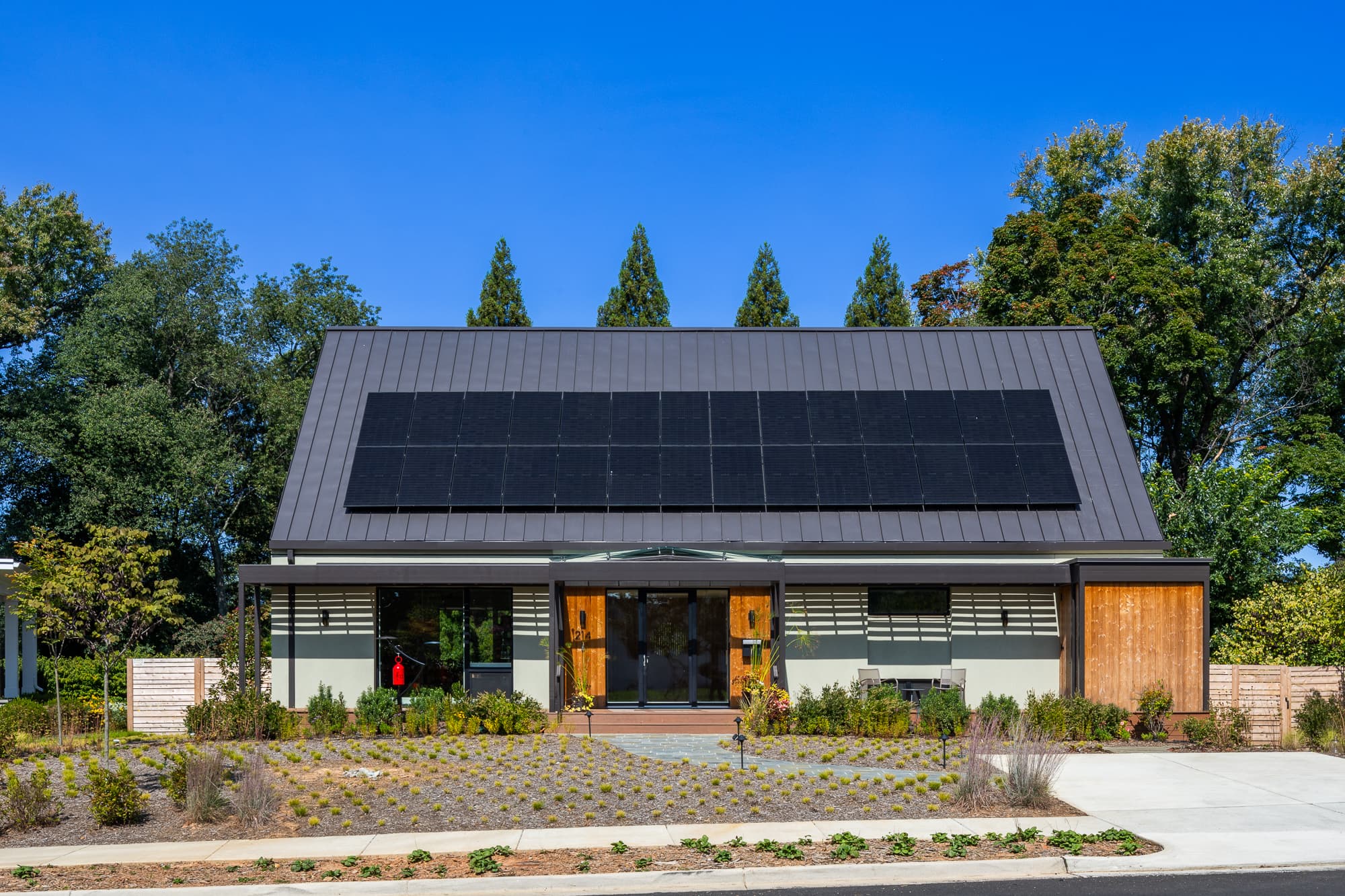
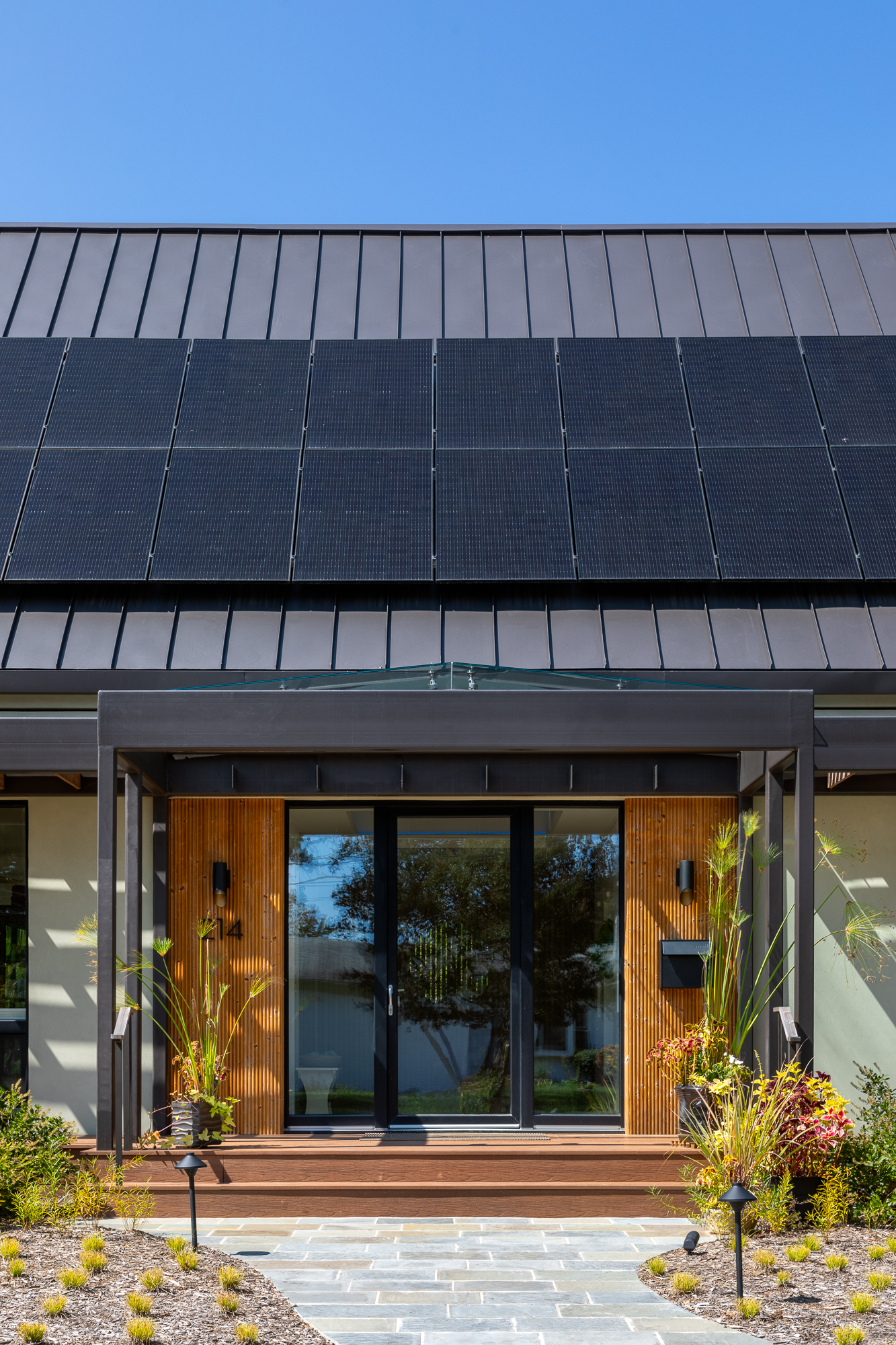
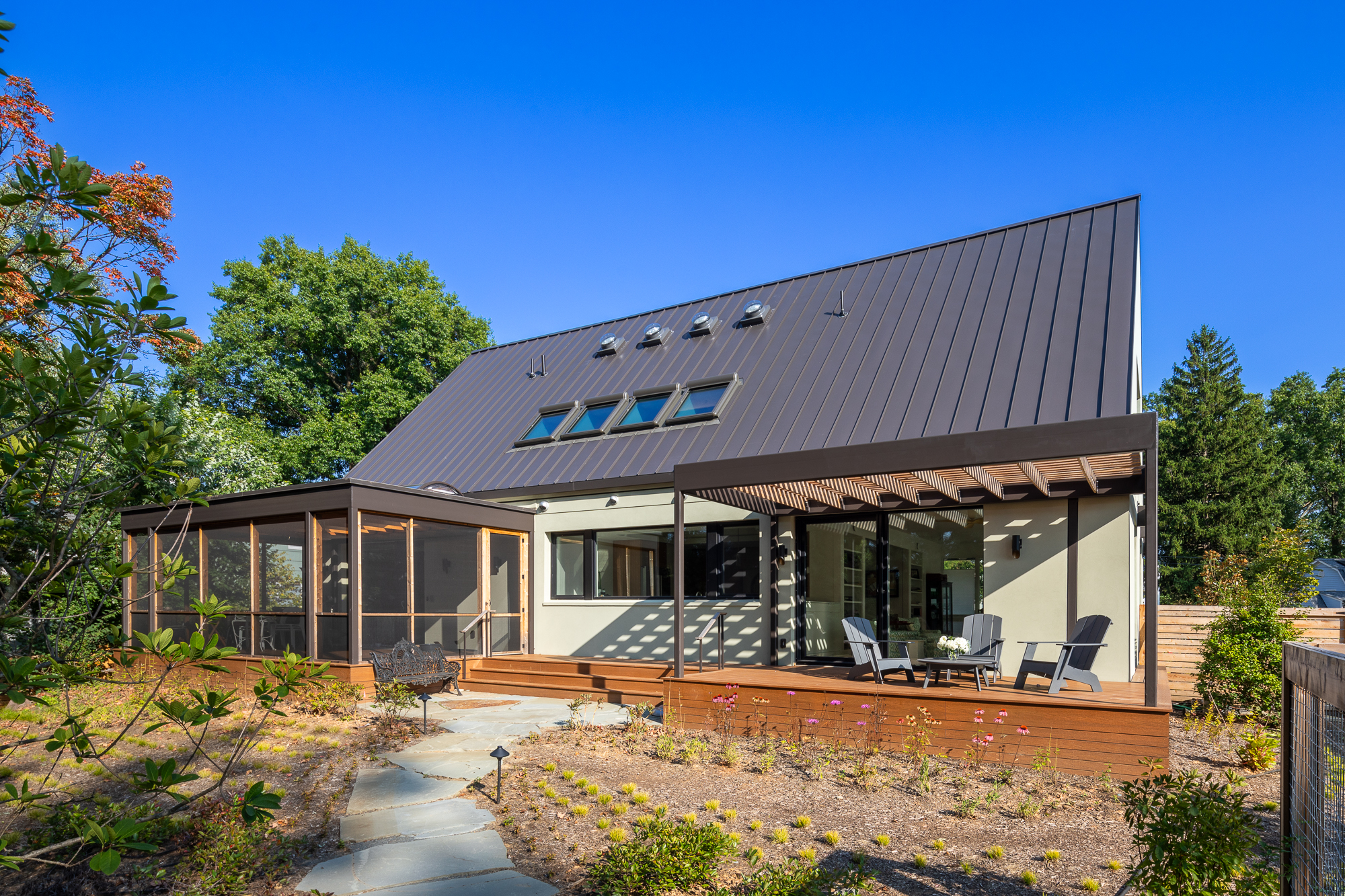
The Vienna Zero Energy project started construction early 2023 and has recently received Phius ZERO 2021 Design Certification, meaning the energy used by the building is reduced in cost-optimized ways, and the building is durable, healthy, safe, comfortable, quiet and quality-assured. We anticipate Phius ZERO 2021 final certification once we the final airtightness test and inspections are accomplished by a Phius certified rater. Our preliminary blower door result is 0.21 ACH at 50 Pa, which surpasses the code requirement for a new house (IECC code requirement is 3.0 ACH at 50 Pa) by more than 90%.
Here are some quick facts about the house:
Energy conservation
The site’s EUI is 11. The U.S. Average Single Family EUI is 45, which means that Vienna Zero Energy 2024 uses about 75% less energy than the average U.S. single family house.
Building energy is conserved by cost-optimized continuous insulation, continuous airtightness, triple-pane windows with multiple connection points and with appropriate solar heat gain coefficient glass, efficient mechanical system, all LED lighting, and Energy Star appliances.
Durability
Durability is also a requirement for Phius certification.
Air carries a lot of moisture. Reducing air infiltration/exfiltration means reducing moisture problems inside building assemblies. The type of insulation used, and the cavity and outboard insulation ratio are considered in the design to comply with Phius’ moisture control guidelines to minimize condensation risk.
Window frames must meet Phius requirements. The window frame is the most valuable place against condensation and needs to meet the Phius standard.
Health
Fresh air is controlled by an Energy Recovery Ventilator (ERV) which controls the quantity and quality of air by specifying where and how much to get fresh air and by filtering it through a MERV 13 filter.
Minimizing condensation risk helps to avoid mold growth.
Phius collaborates with the DOE and EPA. Phius-certified buildings need to comply with the EPA Indoor airPLUS protocol, which includes low or zero VOC emissions in wood products, paints, and sealants.
Safety
Building is electrified. No fossil-fueled combustion is permitted.
Comfort
Maximum temperature difference at interior surface needs to be less than 7.2F. The tallest window in the building is the coldest surface and needs to meet the Phius standard.
Quiet
Passive buildings reduce the noise inside through thick insulation and high-quality windows. The noise is typically reduced by 10db, which is a 50% reduction of the noise level.
Quality
3rd-party on-site inspection is required to assure the buildings are built the way it is designed. For example, insulation installation is grade 1 (no gaps or voids). Test and balancing is required to confirm that the whole mechanical system is working as designed.
Zero Energy
Building annual operation energy and electric vehicle charging energy is netted out with fewer solar panels (11kw PV system).
Resilient
Batteries: Prepare for future use of batteries to store energy produced by PVs. Secure space and conduits for future batteries when the technology becomes more advanced and the price becomes more affordable.